Bootstrap vs UIKit vs Foundation - We take a look inside all the popular frameworks on the market and find the 10 Responsive Frameworks You Need.
Responsive Frameworks are springing up everywhere lately, but crowding the market occasionally leads to confusion. Whether you call them responsive grid systems or a css responsive layouts - they are a web designer's best friend and we love them as much as anyone. The only issue we have with responsive frameworks is that there are just so many out there and when you're brain shoots to Bootstrap vs UIKit vs Foundation vs everything else, it can be a tough decision. With that in mind, we'll try to save you some time and give you a few more tools... because these are the only css libraries you need to provide good responsive design to your clients.
Requirements for a Solid Responsive Framework
Frameworks are primarily time-savers and in that respect, you need to walk a fine line between compiling code you always use and also remembering every project is unique. With that in mind, a "Responsive Framework" is generally defined as a collection of code (mostly CSS) that give's you the basic building blocks needed for a website or webapp. A solid layout, minimal typography, functional components, and standard javascript functionality is all you really need. In a macro view, having an assortment of quality frameworks allows a designer to do more high-quality projects in a minimal amount of time. This makes having a selection of great frameworks very important for developers and designers alike. Now that we've got the formalities out of the way, let's get to the details. We'll start with our 5 Must Have's.
Twitter Bootstrap

Foundation

UIKit

Responsive Grid System

Base
A Brief Explanation of Framework Faveorites
Foundation: From top to bottom, there is simply no framework better. Although this release is fairly recent, I would have said the same about the previous Foundation. The base is solid, functionality is well documented, the theme roller does its job, email and app foundations are a pleasant surprise, the building block library helps a ton, the scripts are very well done (Orbit Slider, Icon Fonts, etc), and the code is shrinking at an impressive pace. The responsive css layout examples are very helpful too.
Twitter Bootstrap: Bootstrap has grown to become invaluable for web designers. The team has probably made the largest push for the "responsive cause". It's a 12-column responsive grid that makes a great starting point. Twitter Bootstrap should be high on the list of any responsive project and has done wonders for the use of grids in web design.
UIKit: We've got a lot of faith in the YooTheme team and if you're a tinkerer, this CSS library is right up your alley. The core works on a grid, runs w/ LESS or SASS on Gulp, features all the layout basics, and comes with a killer theme customizer for generating your themes. The real kicker with UIKit is how well the advanced javascript functions are integrated. Pick what you need, build your style, compile it from less, and you are ready to roll. On top of that - The documentation is second to none.
Responsive Grid System: If you're a minimalist, RGS uses a solid set of responsive columns and codes very cleanly. Despite the simplicity, the learning curve is actually a bit steeper then you'd guess. Flexible, but not exactly intuitive. On the plus side, the Playground is a really nice addition.
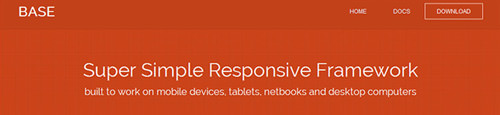
Base: The core is stable and the Gulp inclusion let's you hit the ground running. Once you get familiar the layout is practically bulletproof. The primary downside (for me) would be the documentation and the lack of fancy javascript effects.
If you realize that you're basically trading speed for "ease of use" with any Responsive Framework, the choices really become clearer. If you want to take a little additional time and build something quality, the battle would be UIKit vs Foundation. If you'd like something well documented, the match-up should be Bootstrap vs UIKit. to the If time was a large factor the choice should be Unsemantic vs Bootstrap. Ultimately if you're looking for the best website you can make, Foundation vs UIKit should really be the choice at hand.
5 More CSS Frameworks Worth Keeping Around
- Less Framework 4 - https://lessframework.com/
- Skeleton - http://www.getskeleton.com/
- Unsemantic - http://unsemantic.com/
- Mueller Grid System - http://muellergridsystem.com/
- Titan - http://www.titanframework.net/
If you need a solid responsive web developer to assist you on your next project, shoot us a message on our contact page. If you have any questions or CSS framework recommendations, drop us a message on your favorite social media and give us a share while you're there.